
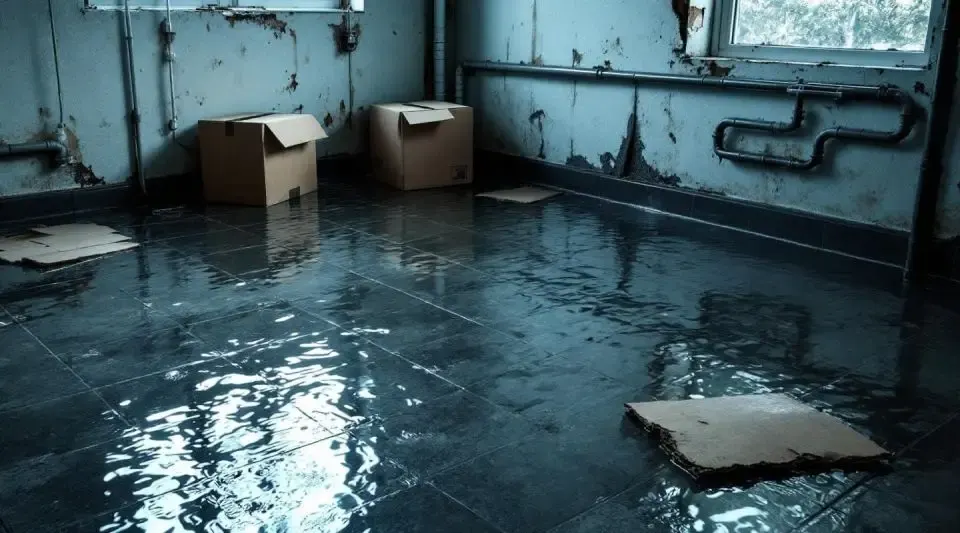
Understanding Flash Flood Ingress in Loveland Properties
When severe weather systems roll through Hamilton and Clermont Counties, rapid precipitation can quickly overwhelm soil capacity. Properties situated along rolling terrain, near the Little Miami River basin, or at the base of sloped driveways face an immediate risk of surface water runoff entering lower levels. When surface water flows directly off yards and streets into foundation walls, window wells, or walk-out doors, it creates a severe crisis requiring immediate loveland storm water ingress emergency repair.
Homeowners often continue with our Burst Pipe Water Damage Cleanup Cincinnati and Loveland service area pages for next steps.
Unlike clean water line breaks, overland runoff picks up soil, agricultural fertilizer, lawn chemicals, asphalt oils, and biological pathogens during its flow. This transforms the intrusion into high-hazard Category 3 water. Immediate containment is vital to protect your structural framing, indoor air quality, and physical safety. Knowing how to execute an organized overland flooding response loveland oh makes all the difference between minor structural drying and a massive torn-out renovation.
Immediate Safety and First Hours Checklist
Before touching standing water or stepping into a flooded basement, safety must remain your primary focus. Hydrocution risks, structural weakness, and toxic exposure increase significantly when storm runoff enters a building. Follow these initial safety steps while waiting for professional help:
1. Disconnect Electrical Mains: If your circuit breaker panel is safely accessible without standing in water, shut off main power to the affected areas immediately. 2. Evacuate Occupants and Pets: Keep children, elderly family members, and pets far away from floodwaters to prevent accidental slip falls or pathogen exposure. 3. Avoid Contact with Water: Avoid wading through standing water barefoot or in open shoes. Category 3 runoff carries dangerous microscopic organisms. 4. Document Visible Conditions: Take clear photos and high-resolution videos of the water level, entry points, and damaged contents for insurance filing. 5. Call Emergency Restoration Services: Reach out for certified emergency storm damage repair loveland oh to get industrial extraction units en route.
Categorizing Overland Water: Why Action Cannot Wait
The Institute of Inspection, Cleaning and Restoration Certification (IICRC) classifies water intrusion into three distinct categories based on contamination risk. Overland storm water runoff is strictly classified as Category 3 ('Black Water'). Because this water traverses streets, lawns, and septic drainage fields before invading your home, it poses substantial health hazards.
If Category 3 water remains stagnant inside wall cavities or beneath carpet underlayment for more than 24 hours, microbial amplification explodes. Pathogens multiply rapidly in warm, humid indoor conditions. According to the EPA Mold Guidelines, mold spores can begin germinating within 24 to 48 hours of liquid exposure. Delaying remediation dramatically increases total restoration expenses and requires extensive tear-out of porous building materials.
Step 1: Rapid Storm Water Extraction and Containment
The initial technical phase of recovery relies on high-volume extraction. Standing water continues to wick upward into drywall, door jambs, insulation, and timber framing every minute it remains. Our certified restoration technicians deploy truck-mounted extraction machinery capable of pulling thousands of gallons of fluid out of lower structures rapidly.
Executing comprehensive storm water extraction loveland ohio requires specialized tools engineered for heavy sediment load. We utilize submersible trash pumps for deep pooled areas filled with silt, followed by weighted self-propelled extractors across carpeted and concrete floors. Extracting physical water liquid is up to 500 times faster than removing moisture through evaporation alone. Eliminating bulk water immediately stabilizes the building's indoor relative humidity.
Step 2: Scientific Moisture Mapping and Hidden Water Detection
Water rarely remains where you can see it. Storm runoff quickly migrates under baseboards, seeps down expansion joints, and saturates sill plates hidden behind drywall. Simply pumping out surface water leaves substantial moisture trapped in structural assemblies, leading to dry rot and structural compromise over time.
We utilize advanced non-invasive diagnostic tools, including FLIR thermal imaging cameras and penetrative pin-type moisture meters, to trace the complete migration path of the intrusion. By creating a accurate moisture map, our technicians isolate every wet wall cavity, subfloor channel, and concrete slab section. This precise diagnosis ensures we dry every concealed structural member, a process similar to our protocols for Sharonville Basement Flood Extraction Steps | Sump Pump Guide.
Step 3: Targeted Demolition and Structural Decontamination
Because overland runoff brings organic pollutants and mud inside, porous materials that have absorbed Category 3 water must generally be removed safely rather than dried in place. Drywall, batt insulation, carpet padding, and porous composite trim saturated with storm runoff cannot be fully sanitized and must be removed under controlled containment.
Our technicians perform controlled 'flood cuts,' removing damaged drywall 12 to 24 inches above the highest wet water line. Once non-salvageable materials are hauled away, exposed framing studs, concrete floors, and foundation walls are scrubbed using EPA-registered broad-spectrum antimicrobials. This thorough sanitization eliminates bacteria, viral agents, and fungal spores, making the space safe for structural drying equipment.
Step 4: Industrial Dehumidification and Applied Psychrometrics
After removing contaminated porous materials and applying antimicrobial washes, we begin high-capacity structural drying. Drying is an applied science (psychrometrics) that balances relative humidity, vapor pressure, temperature, and high-velocity airflow to force deep-set moisture out of heavy timber framing and concrete slabs.
We strategically position Low-Grain Refrigerant (LGR) dehumidifiers alongside directional air movers throughout the affected structure. LGR dehumidifiers continue pulling water vapor out of the air even in cooler, damp environments like basements. Our team monitors grain depression, ambient temperature, and relative humidity daily, adjusting airflow until all structural components return to their pre-loss dry standard moisture content.
Special Considerations for Commercial Loveland Properties
Overland runoff does not spare local retail stores, multi-family complexes, or office parks. Commercial buildings feature unique structural systems, such as elevated access subflooring, commercial grade vinyl composition tile (VCT), heavy metal stud walls, and sprawling concrete foundations. Heavy rainfall intrusion can force a business to halt daily operations entirely.
For commercial assets, long downtime leads to massive financial disruption. We provide dedicated commercial emergency response units capable of executing specialized protocols, detailed in our guide on Office Building Flood Repair Cincinnati. We work alongside facility managers to isolate flooded zones, setup containment barriers, restore safe access routes, and maintain business continuity while carrying out comprehensive heavy rain water intrusion remediation loveland.
Managing Insurance Claims for Surface Flood Damage
Navigating an insurance claim following an overland flood event can be complex. Standard home insurance policies routinely cover sudden internal water losses—like those addressed in our Emergency Water Damage Restoration Cincinnati | Nision guide—but exclude water that enters from ground surface runoff unless a dedicated flood endorsement or separate NFIP policy is present.
Our administrative team works directly with property owners and insurance adjusters across Hamilton and Clermont Counties. We compile exhaustive claim documentation, including thermal photo logs, psychrometric drying charts, digital moisture readings, and itemized line-item estimates using industry-standard pricing software. This detailed record helps streamline approval processes and ensures your restoration scope reflects the true extent of structural damage.
Long-Term Defensive Measures Against Future Storm Ingress
Once your home is completely dried, sanitized, and rebuilt, taking proactive steps to defend against future storm runoff is vital. As severe Midwest weather patterns fluctuate, implementing permanent physical upgrades helps safeguard your foundation:
- Regrade Exterior Topography: Ensure surrounding soil slopes away from your foundation wall at a minimum drop of six inches over the first ten feet.
- Install Swales or French Drains: Direct surface water flow around your property footprint toward municipal drainage easements.
- Extend Downspout Discharges: Discharge roof runoff at least 10 feet away from foundation walls onto negative-sloped terrain.
- Maintain Exterior Sump Systems: Upgrade to dual-pump systems equipped with heavy-duty battery backups and smart high-water alarms.
- Seal Foundation Penetrations: Apply high-grade hydraulic cement and elastomeric coatings to exterior basement wall hairline cracks.
Rely on Nision Restoration for Local Loveland Emergency Recovery
When flash flooding sends surface runoff into your basement or lower level, every minute counts. Delaying professional intervention amplifies structural decay and exposes your household to hazardous bio-contaminants. Nision Restoration delivers local, certified expertise directly to your door with rapid arrival times and state-of-the-art drying technology.
From initial water extraction and thermal moisture tracing to complete decontamination and structural repair, our team handles every phase of loss recovery. If you are experiencing water intrusion or require immediate basement water ingress cleanup cincinnati or Loveland support, contact our emergency restoration line immediately to restore safety, health, and comfort to your home.